

An office move is a chance to fix furniture problems that have built up over time, but it can also create new ones if furniture planning starts too late. A desk that worked in the old office may not fit the new floor plan. Existing conference tables may be too large for the new meeting rooms, and storage that once sat against an open wall may block circulation in a smaller space.
The furniture plan should be developed alongside the move plan, not after boxes are packed. This office relocation furniture checklist covers what to measure, what to reuse, what to replace, and what to schedule before employees arrive at the new location.
Before moving office furniture, confirm the new floor plan, employee count, workstation needs, meeting-room sizes, storage requirements, delivery access and installation schedule. Inventory the furniture you already own, decide what can be reused, identify gaps early and coordinate furniture placement with power, data and IT locations before move-in day.
Furniture decisions should begin with the new space. Use the floor plan to identify how many people each area needs to support and what each room is expected to do.
Map out:
Do not assume the new office should copy the old one. A relocation is the right time to reconsider desk sizes, storage placement, shared areas and underused furniture before those items are moved and installed again.
Start with the number of people the office needs to support on a normal workday. Include planned hires, hybrid employees, shared desks and any teams that need dedicated space.
The headcount affects more than the number of desks. It also changes chair quantities, filing needs, conference-room capacity, visitor seating and the amount of shared storage required.
Create a simple inventory before deciding what to buy. Record each item, its size, condition and whether it still fits the way the team works.
Furniture Type | Keep | Replace | Check Before Moving |
Desks / workstations | If size and layout fit the new plan | If damaged, oversized or mismatched | Width, depth, returns, pedestals and cable access |
Office chairs | If condition and fit are still appropriate | If worn or no longer suitable | Chair type, dimensions and intended user |
Conference tables | If room size and seating needs match | If scale no longer fits | Length, width, chair clearance and delivery access |
Filing / storage | If files and supplies still require it | If storage is excessive or poorly sized | Cabinet depth, door/drawer clearance and placement |
Reception furniture | If it fits the new entry experience | If scale or layout changes | Visitor flow, desk position and waiting-room space |
This step prevents paying to move furniture that will not be used. It also makes the purchase list more accurate because you can see which items are true gaps rather than assumptions.
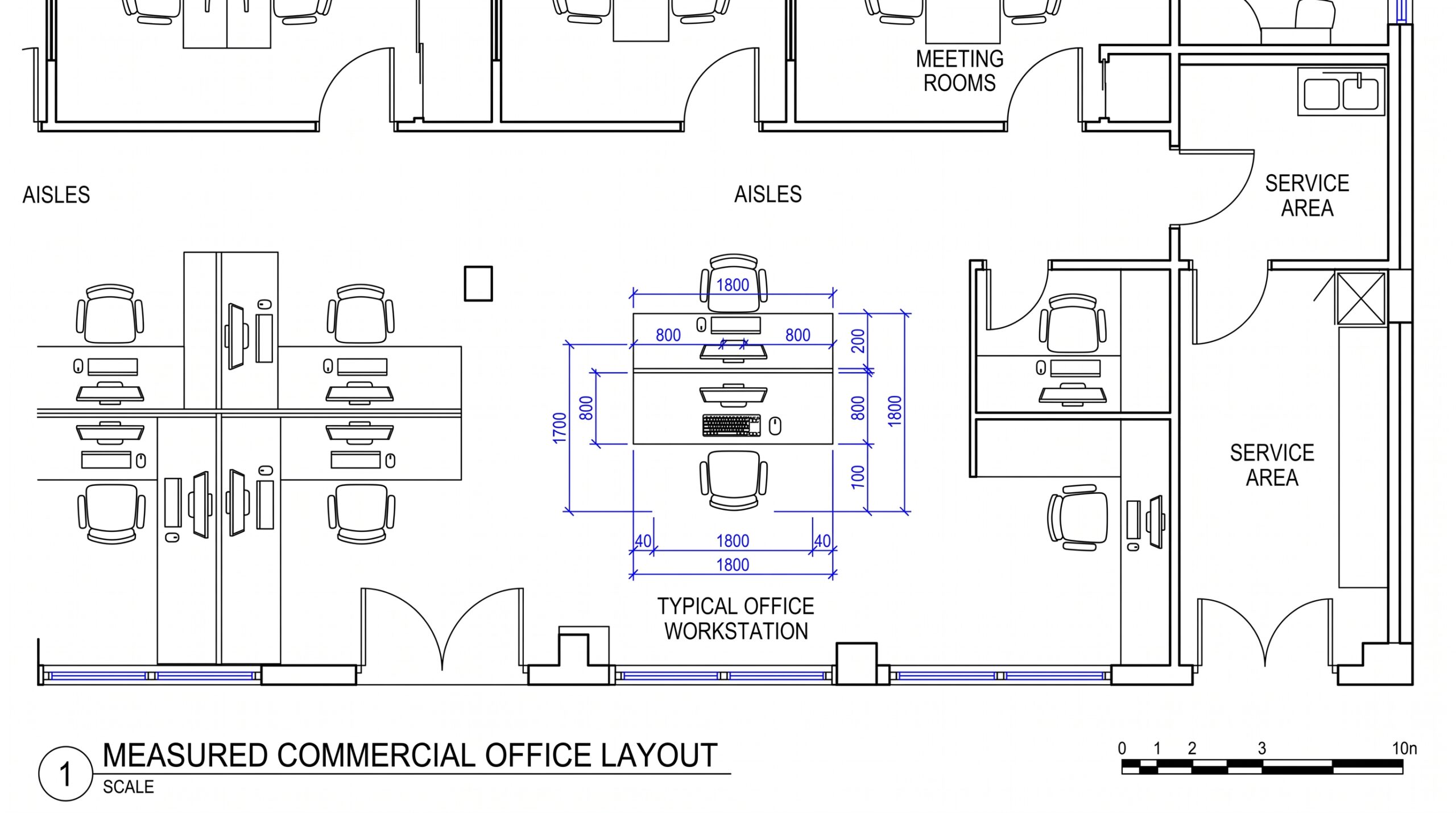
Room dimensions alone are not enough. Measure the usable footprint after accounting for door swings, built-in elements, power locations, windows and circulation.
For workstations, measure desk width and depth plus chair movement. For conference rooms, include the table, chairs and space behind occupied seats. For filing, account for the depth of open drawers or doors. These details determine whether the room still functions after furniture is installed.
Reusing furniture can help control the relocation budget, but only when the pieces fit the new plan. Avoid keeping a desk simply because it is already owned if it blocks the intended layout or leaves employees with too little usable space.
Replacement decisions are usually easier when they are based on specific problems: the old table is too large, the chair is worn, the desk return faces the wrong direction, or the storage cannot fit the new wall.
Choose workstation layouts based on job tasks, equipment and available space. A single-monitor administrative workstation may need less surface area than a dual-monitor setup with regular paperwork. Private offices may need visitor seating, while open work areas may benefit from more compact desk footprints.
309 Office Furniture offers straight desks, workstations and other desk configurations that can be compared against the new floor plan before the move.
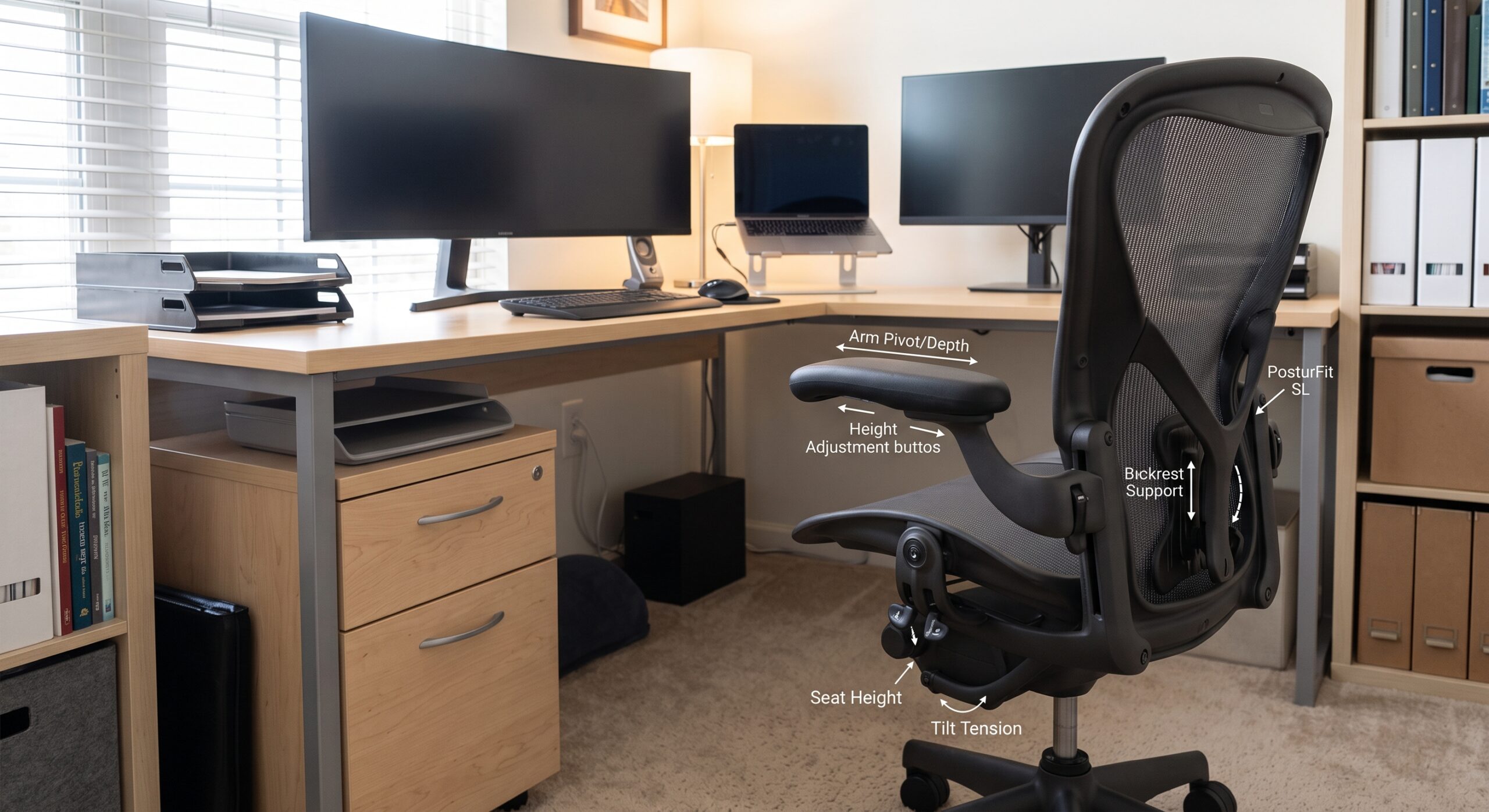
A chair affects the workstation footprint. Armrests, chair width and how far the chair rolls back can change whether the desk position works in the room.
For larger relocations, consider whether one chair model fits every employee or whether a few seating types would better support different users and areas. Task seating, executive seating, guest chairs and big-and-tall options may all serve different purposes.
A conference table should be selected after the room and seating capacity are confirmed. Do not rely on the number of chairs shown in a product image.
Measure the table footprint, chair clearance, presentation area, room entry and any credenza or storage that will remain in the space. Larger conference tables also require more attention to delivery access and installation.
Office moves often reveal storage that has accumulated without being reviewed. Before relocating filing cabinets, bookcases and supply storage, decide what the new office actually needs.
Centralized storage may work better than a cabinet at every desk. In other offices, employees still need individual filing close to their workstations. The goal is to move the storage that supports daily work rather than automatically recreating the old layout.
Furniture placement and technology placement should be reviewed together. A workstation can fit perfectly on a floor plan and still fail if it blocks power access or places employees too far from required data connections.
Before installation, confirm:
Making these decisions before furniture arrives reduces the need to move heavy pieces after installation or run temporary cables through walkways.
Large desks, conference tables and storage pieces need a clear route into the building. Measure or confirm loading areas, exterior doors, interior doorways, hallways, elevators and stair access where relevant.
Building management may also have requirements for loading docks, elevator reservations, delivery hours or floor protection. Those details should be resolved before the installation crew arrives.
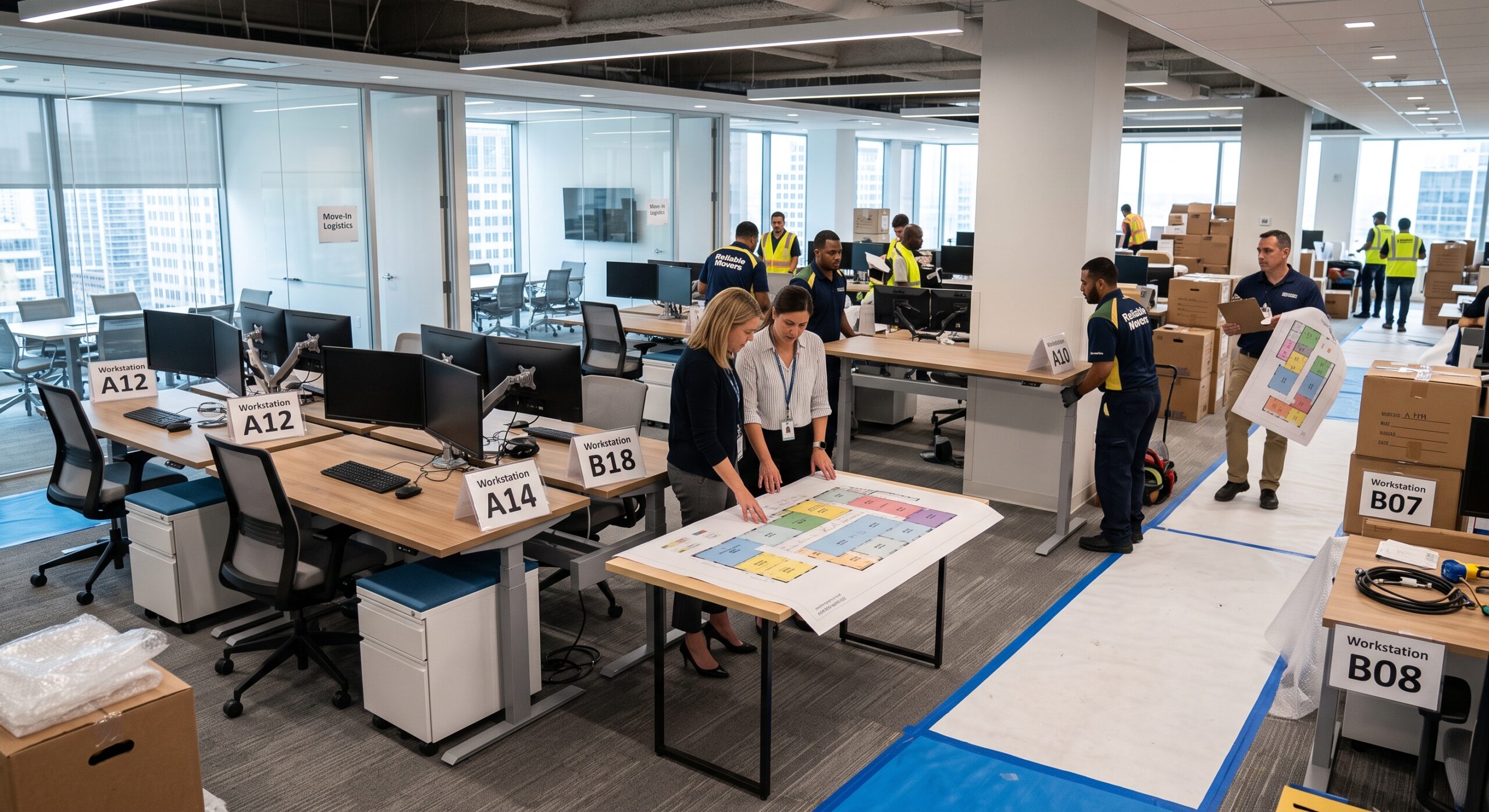
Whenever possible, install furniture before employees arrive. That provides time to place workstations, level desks, assemble tables, position storage and correct layout issues without employees working around an active installation.
309 Office Furniture provides delivery and installation services, with an in-house crew identified on the company site. For relocation projects, scheduling those services early helps connect the furniture plan to the actual move timeline.
Stage | Furniture Tasks | Goal |
Early planning | Confirm floor plan, headcount, room uses and furniture inventory | Know what the new office actually requires |
Selection phase | Choose items to reuse and identify furniture gaps | Avoid late, reactive purchases |
Pre-move | Confirm measurements, access, power/data and delivery schedule | Reduce installation surprises |
Installation | Place and assemble furniture before staff arrival where possible | Have work areas ready for use |
Post-move | Review workstation fit, storage and any remaining gaps | Correct issues after real-world use |
Waiting until the final weeks can limit the time available to compare furniture, verify dimensions and coordinate delivery. Start once the new floor plan and occupancy needs are reasonably clear.
Moving unwanted or poorly sized furniture adds cost and creates clutter in the new space. Review each item before it is included in the move.
A desk or table that looks appropriate online may not fit the new room after chairs, storage and walkways are considered. Use actual product dimensions and room measurements.
Workstations need power, data and equipment. Plan technology and furniture together so desks do not end up blocking outlets or forcing awkward cable routes.
Combining installation and employee move-in can create unnecessary congestion. Furniture should be placed and checked before the office begins normal operations when the schedule allows.
Start as soon as the new floor plan, headcount and room uses are clear enough to make decisions. The earlier furniture is reviewed, the more time there is to compare options, verify measurements and schedule delivery and installation.
Reuse furniture when it is in suitable condition and fits the new layout. Replace pieces that are damaged, poorly sized or incompatible with the new workstation, storage or meeting-room requirements.
Prioritize employee workstations, office chairs, conference tables, reception furniture and essential storage. Installing these before staff arrival makes it easier to test the layout and correct placement issues.
309 Office Furniture states that it helps customers with office space design and provides delivery and installation services. Businesses can contact the Hatfield showroom to discuss the scope and scheduling of a relocation project.
309 Office Furniture & Design has a showroom at 1711 Bethlehem Pike in Hatfield, Pennsylvania. Comparing desks, chairs, tables and storage in person can make scale and fit easier to judge before placing a larger order.
A successful office relocation is not just about moving furniture from one address to another. It is about making sure the new workplace is ready for the people and tasks it needs to support.
Measure early, decide what is worth moving, fill the real gaps and schedule installation before the office becomes busy. That approach can make the new location easier to use from the first day.
Businesses planning an office relocation can compare desks, seating, conference tables, storage and other office furniture at the 309 Office Furniture & Design showroom in Hatfield, Pennsylvania.
1711 Bethlehem Pike, Hatfield, PA 19440
(215) 822-3333